
When the dreaded "iPhone Storage Almost Full" alert appears, most people start deleting apps. That's usually the wrong move: check Settings → General → iPhone Storage and you'll almost certainly find that Photos is your biggest category — often by a wide margin.
The good news is that a huge share of that space is pure clutter: duplicate photos, thousands of old screenshots, blurry shots that never got deleted, and a handful of enormous videos. Clearing just the clutter routinely frees several gigabytes without touching a single memory you actually care about.
Where the hidden storage actually is
Before deleting anything valuable, clear these buckets in order of impact:
- Large videos — a single 4K video can outweigh 500 photos
- Duplicates and similar photos — burst shots, double-saves, repeated takes
- Screenshots — most people accumulate 1,000+ per year and never look at them again
- Blurry and failed shots — invisible in day-to-day scrolling, but they add up
- Recently Deleted — deleted photos keep occupying space for 30 days until you empty this album
Free up iPhone storage with FlickClean (step by step)
- Check what's eating your storage. Open Settings → General → iPhone Storage. If Photos is at or near the top of the list, you're in the right place — keep going.
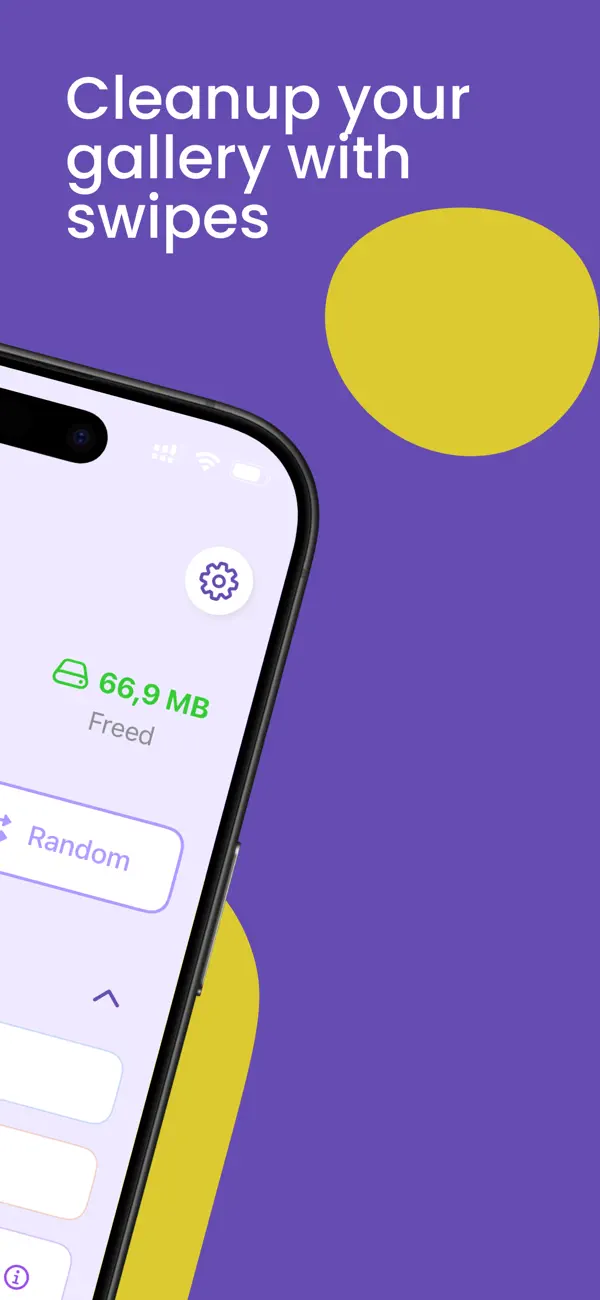
- Download FlickClean. Get FlickClean free on the App Store. It's a 5.6 MB download that runs entirely on-device — no uploads, no account.
- Start with Videos mode. Videos are the biggest wins. FlickClean surfaces them so you can preview and swipe away screen recordings and clips you no longer need — often gigabytes in a couple of minutes.
- Clear Screenshots and Blurred. Run Screenshots mode to bulk-clear old screenshots, then Blurred mode to remove out-of-focus shots the Photos app can't detect.
- Finish with Similar mode. Group duplicate and near-duplicate photos, keep the best of each group, and swipe the rest away.
- Empty Recently Deleted. Open Photos → Albums → Recently Deleted → Delete All. Until you do this, iOS still counts the deleted photos against your storage.
💡 Pro tip: After emptying Recently Deleted, give iOS a few minutes and reboot if the storage number doesn't move — iPhone Storage stats can lag behind actual deletions.
Frequently asked questions
How much storage can I realistically free?
Users with a few years of photos typically free between 1 and 10+ GB in their first session, depending on how many videos, screenshots and duplicates have accumulated.
Will deleting photos on my iPhone remove them from iCloud?
If you use iCloud Photos, deletions sync across devices. Photos remain in Recently Deleted for 30 days, so you have a safety window. If you want to keep everything, back up first.
Do I need to pay to clean my storage?
FlickClean is free to download with a daily cleaning limit. Premium removes limits from $2.99/week, with a 3-day free trial — enough to deep-clean an entire library.